The customer experience

24 05 2011

In the old days, the only place to shop was a physical store (aka “bricks & mortar” stores). Going way back, most folks purchased their goods from a handful of different store types, including the grocery store (or “market”), the pharmacy, the department store, and maybe a “five & dime” store that carried a little bit of everything. Going way, way back, folks made purchases from the local general store and the Sears & Roebuck catalog.

When the business of retailing started getting into full swing, retailers began emphasizing service. There are many storied references to amazing customer service moments, including the clerk at Seattle-based Nordstrom who took a return of tires even though the store never sold them. Or, department store magnate Marshall Field, whose Chicago department store was a bastion of fine service and whose slogan was “give the lady what she wants.” These retailers – and many others – understood that providing exceptional service was part of the shopping experience.

Kuala Lumpur International Airport, Malaysia

Travelers on their way to destinations across the globe

The service economy of the 21st century is one that emphasizes so much more than simply providing exceptional customer service. In fact, “customer service” is often defined as nothing more than the basic operational functions of a clerk taking an order; a bellman handling one’s luggage; or a bank teller handling a deposit. Rather, “service” has evolved into “experience,” where experience includes all aspects of a consumer’s interaction with the business or brand. The two often work hand-in-hand, but it’s ultimately the experience that makes the difference it today’s competitive, consumer-driven environment. From the moment a business is entered, a web site is visited, or a passenger arrives at the airport, it’s time for the business to begin delivering on its marketing promise and reputation.

Air travel is rarely exciting or an adventure any longer; for many people, it’s even a commute to work. Asian air carriers and airport operators understand this, though, and work hard at delivering a unique & memorable experience for travelers. Malaysia Airlines, consistently ranked as one of the world’s top airlines, lets travelers check their luggage at the downtown Kuala Lumpur train station. From there, luggage and their passengers travel in comfort by train to Kuala Lumpur airport, ranked one of the world’s most beautiful airports by Travel & Leisure magazine. At KUL, passengers have an array of international shops & restaurants from which to choose, or they can simply relax in the atrium with its own greenhouse of tropical plants. The airport’s services, architecture, layout, and staff all come together to make a typically unpleasant experience something exceptionally enjoyable.

While customer experience is built on many factors, employee interaction with consumers can make or break the experience. For many, the best price, a great location, or a wonderful design can be ruined by a poor interaction. Department store retailer Kohl’s understands this. Its employees make it easy for shoppers to redeem discounts and are even known to accept an expired coupon when a customer asks.

Even online or over the phone, the human interaction is critical and customers expect quick responses and accurate answers to questions. L.L. Bean knows, and makes the customer experience very positive with its unconditional guarantee and free shipping everyday. In 2010, the retailer was named #1 in terms of customer service by BusinessWeek.

Experience matters. For businesses that depend on customers, the experience can be a matter of success or failure.



1,000 words, image one

20 05 2011

(First in a series of eventually 1,000 images).

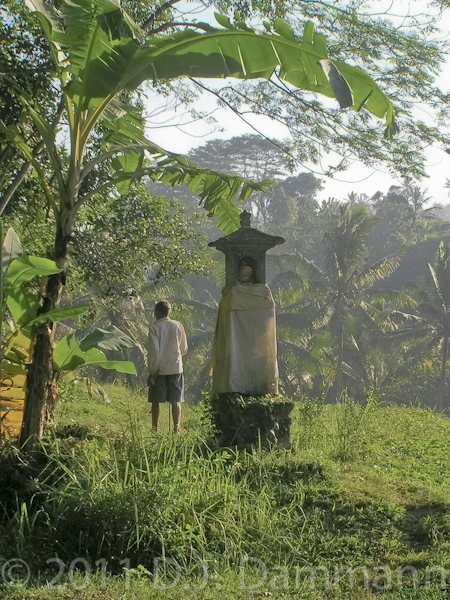
It’s said that a picture is worth a thousand words. Or that one picture can tell the entire story. What does the picture below say to you?

Bali, Indonesia

This was taken in Bali, on an early morning walk. The man had just left an offering at a shrine in his field. Perhaps he prayed for abundant crops? Or maybe he prayed for the health of a family member? Or, he may have been on his own morning walk or meditation and leaving an offering was simply part of his routine with no particular thought behind it.

Bali is one of the thousands of islands that make up Indonesia, home to the largest Muslim population in the world. Most Balinese practice Hinduism, a religion with origins in India. A peaceful island with gentle people, it is not uncommon in Bali to find shrines in homes, fields, and public places such as hotel grounds or village squares.


Las Vegas’ Neon Museum shines, day or night

5 05 2011

There’s so much to do in Las Vegas. The casinos, entertainment, and seemingly unlimited dining options are big draws, but how many folks can say they’ve visited The Boneyard, a collection of historic neon signs in downtown Las Vegas?

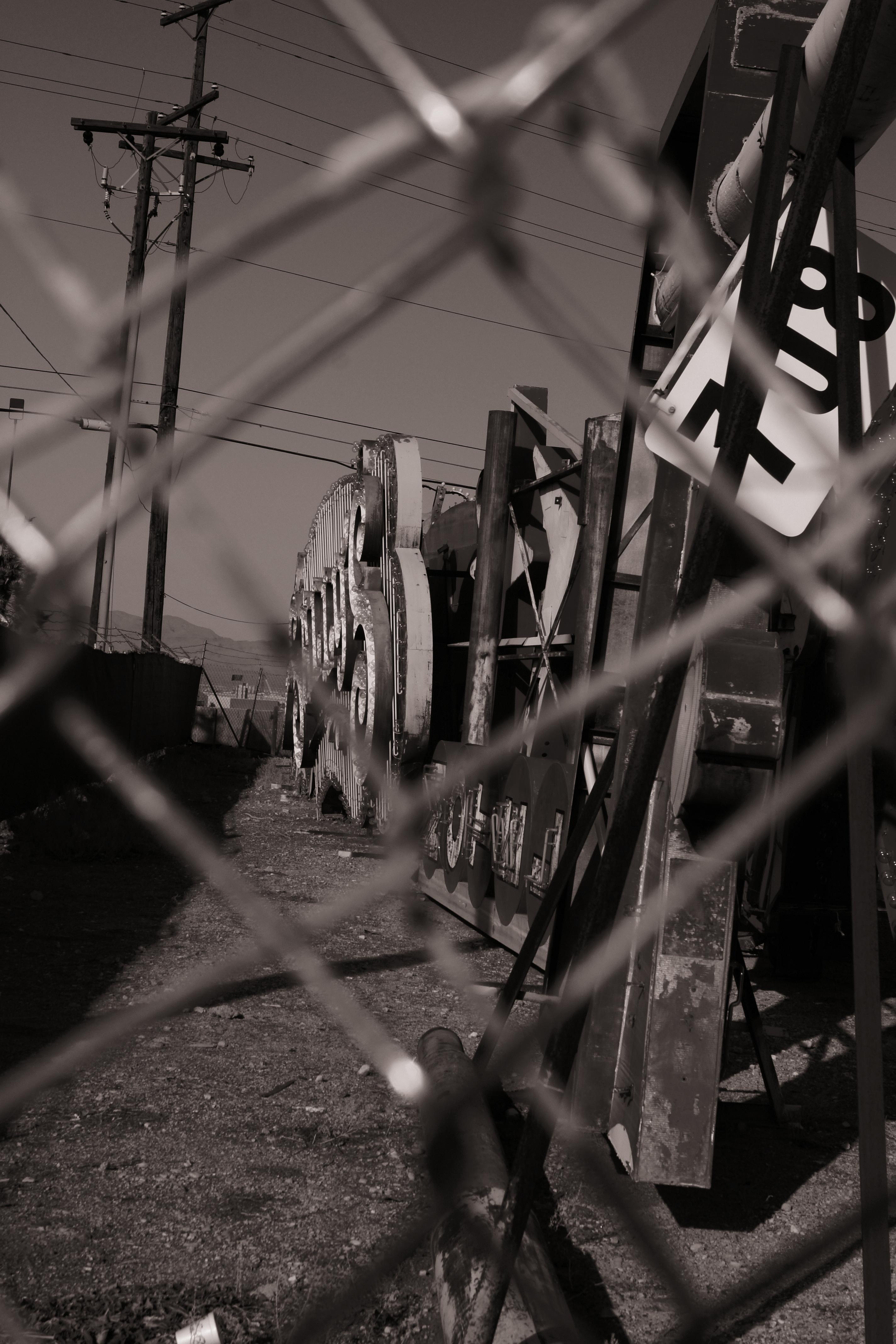
Neon Boneyard, Las Vegas

A forlorn sign waiting for its rebirth

Neon (which produces a red-orange glow, other colors are produced by other inert gases) was once the primary medium for Las Vegas signage. The 1940s through 1960s saw spectacular growth in the neon sign industry, and particularly those designed by the Young Electric Sign Company (YESCO). Many of the storied signs of today, such as the still-standing Vegas Vic in downtown’s Glitter Gulch, or the now-decommissioned Stardust sign on the Strip, were installed during this period.

As Las Vegas continued to grow and signage technology changed, signs were dismantled and left to bake in the desert heat or fall into disrepair at the hands of a new business owner. In 1996, that changed with the founding of the Neon Museum.

The Neon Museum is a non-profit organization devoted to collection, preservation, and exhibition of neon signs for the purpose of educational and cultural enrichment. The museum showcases this very unique art form by restoring the signs to their original state and lighting the night sky with these bold displays. The museum officially opened November 15, 1996 when The Hacienda Horse and Rider was lit at the intersection of N. Las Vegas Blvd. and Fremont St.

The collection is showcased in two areas, along Fremont St. from Las Vegas Blvd. to 3rd St., and at the under-development Neon Boneyard Park at 821 N. Las Vegas Blvd., adjacent to the relocated La Concha Motel. A third gallery is along the Las Vegas Boulevard State Scenic Byway, which runs from East Washington Ave. to East Sahara Ave. Each of the collections captures Las Vegas history vividly and splendidly.

Aladdin’s Lamp, Nevada Motel, and Dot’s Flowers are only a few of glowing artworks on display at the Fremont St. gallery, which is open 24 hours daily as a self-guided walking tour. The scenic byway collection includes the Silver Slipper and original Binion’s Horseshoe; these signs are in the medians of the road so are most easily viewed from a distance.

The Neon Boneyard Park is perhaps most interesting even though it is currently under development and the signs are stacked in a parking lot behind chain-link fence. These signs are raw, weather-worn, and lonely with no glow or dazzle. Each has its own story to tell, but the visitor has to imagine it for themselves or perhaps relive an earlier time when they visited a particular casino or sight themselves. Eventually, the signs will be restored to their full working glory and will be displayed in similar fashion to the other installations around town. Plans are underway for the La Concha – a mid-century architectural delight with its own special history – to be the museum’s visitor’s center and main gateway.

Visit the Neon Museum’s website to learn more about the collection and monitor information about the opening of the visitor’s center. To learn more about the history of neon signs in Las Vegas, visit YESCO’s historical timeline and click on “The Golden Age of Neon.” Visit www.byways.org to learn more about the Las Vegas Blvd. State Scenic Byway.


Travel checklist

27 04 2011

Getting ready for a trip? It can be easy to forget things, and a last-minute weekend getaway can require fast work if there are pets to be boarded, kids to take to the sitter, or lots of details to be arranged.

Fortunately, very few places on the planet are truly remote any longer. Major brands are ubiquitous and most towns have at least one store where basic necessities and simple clothing can be purchased. In most places around the world, you’re never too far from home.

The upside of forgetting items is that there’s an immediate need to go shopping. The downside is that shopping for basics takes time away from enjoying the trip and in many cities even the basics are pretty expensive.

To make a trip more enjoyable, and ease day-before rushing around, have a travel checklist in your arsenal. Download the nnommad travel checklist as part of your travel routine. Then get packing and get going.

>> nnommad travel checklist <<


Welcome

19 04 2011
Paris, France

A warm welcome awaits visitors to Fauchon

Every business welcomes its customers, some better than others. Walmart has long been famous for its friendly store greeters , some of whom can be famous local celebrities. Southwestern quick-serve food chain Moe’s makes the greeting impossible to ignore; employees yell “Welcome to Moe’s!” all the way down the serving line. At businesses like these, the welcome becomes part of the customer experience, and a positive experience can bring repeat customers.

Other businesses miss the boat, forcing their employees to robotically greet each person with the same stock phrase, even when the customer well knows the business they’ve entered. A glum, “Welcome to (insert business here),” delivered over and over to each person in the queue or walking through the door isn’t exactly the warmest of welcomes. Without offering a unique service, differentiating factor, or entertainment value for the customer, this kind of greeting is uninspired and boring.

More important for the customer experience is acknowledgment, accessibility, and friendliness. When a customer walks into a business, the fact that the person is there and an employee is ready & willing to help are at the beginning of the experience. Who wants to walk in and find an empty counter or hunt for an employee when you’re double-parked outside? A smile and a moment of eye contact, along with “hello” or “may I help you?” might be the perfect opening.

Online, there may not be human interaction, but the objective is the same: make the store or site welcoming, easy to navigate, and leave the customer with a positive experience. Make search buttons easy to find and in obvious locations; don’t use pop-ups or pop-unders, and don’t clutter the page with lots of visual noise. For customers who want to find information quickly, links to categories and pages should be in standard screen locations. For browsers, ensure the site has plenty of visuals and links to interesting and informative articles that support the site’s main content.

Like the greeting at Moe’s, a site with a strong commitment and a powerful message should tell it. Zappo’s has one of the most loyal customer followings on the Internet, and the site tells visitors why on every page. The company is committed to service; it has a 365-day return policy; and shipping is free for purchases and returns. Bricks-and-mortar retailer Nordstrom, also with a reputation for outstanding service, offers a clean and simple interface for its site for an easy shopping experience.

The key to making a customer welcome, then? Be genuine, be simple, keep it easy.