Georgia peaches are a summer delight

21 06 2011

Summertime is peach time in the Peach State of Georgia. Peach County, in the middle of the state and just south of Macon is the heart of Georgia’s peach industry. Throughout the area travelers will see large peach orchards, small roadside stands, and large commercial operations.

According to the Georgia Peach Council, annual peach production in the state is approximately 2.6 million bushels annually with more than 40 varieties of peaches grown. Georgia grows clingstone, semi-freestone, and freestone peach varieties. These names indicate whether or not the peach meat “clings” or remains “free” from the pit, or stone.

Byron, GA

Peach season in Georgia is mid-May through August

Franciscan monks introduced peaches to coastal Georgia in 1571. Raphael Moses, a Confederate officer from Columbus, Georgia, is credited as the first person to successfully distribute peaches outside the South. However, it was Samuel Rumph and his Elberta variety peach – named after his wife – which revolutionized the industry due to its superior quality and durability during shipping.

Peak peach season is mid-May through August. Peaches are nutrient-rich, freeze and can easily, and can be incorporated into cakes, pies, breads, sauces, and more. Throughout Middle Georgia, travelers will find roadside stands and local farmer’s markets. In addition, four farms allow visitors to purchase peaches directly, tour packing facilities, and even enjoy lunch (and a peach dessert!) on-site.

Lane Southern Orchards in Ft. Valley welcomes 300,000 visitors annually. Its proximity to I-75 makes it a convenient stop for out of state travelers. The farm offers tours, up-close viewing of the packing facility, year-round activities, and large gift shop. Its Peachtree Café is popular for lunch or an afternoon peach sweet.

Dickey Farms is Georgia’s oldest, continuously operating peach packing house. Located in Musella, the Dickey family continues to operate the farm and retail operations. Visitors to the facility may enjoy homemade peach ice cream and relaxing on the front porch in one of the numerous rocking chairs.

The Pearson family operates Pearson Farm in Ft. Valley. The packing house is open to the public during peak season. Peaches and ice cream critically-acclaimed by Southern Living magazine may be enjoyed on-site or at home. Pearson’s offers gift baskets as well as well as fresh pecans in the fall.

Taylor Orchards in Reynolds offers peaches and strawberries. Shoppers will find a variety of gifts and treats at the farm store.

To learn more about peaches, peach recipes, and peach facts, visit the Georgia Peach Council’s website or visit a local peach farm.


Experience whitewater rapids like never before

16 06 2011
Niagara Gorge, Ontario/New York

The Whirlpool Jet Boat leapfrogs over the Niagara River's powerful rapids

Less than three miles downriver from the roar and majesty of Niagara Falls, adventurers to upstate New York and southern Ontario may experience some of the most extreme whitewater rapids anywhere on the North American continent. Whirlpool Jet Boat Tours offers a safe, comfortable, and thoroughly exciting way to take on thrilling class I-V rapids and see class VI rapids up-close and without fear.

The seven-mile long Niagara gorge roils with energy, the result of water flowing from Niagara Falls at an average volume of 85,000 cubic feet/sec. The 170-foot deep river flows through Whirlpool Rapids, past Devil’s Hole State Park, and northward past three large hydroelectric plants which provide electricity for more than 3,000,000 homes. It is along this stretch of river that whitewater of all classes and class V & VI rapids are experienced. Though the water may seem calm at some points, the river is clearly in control with currents up to 25 mph.

Niagara Gorge, Ontario/New York

The Whirlpool Jet Boat's dry tour lets passengers experience whitewater safely and comfortably

Though not a traditional rafting tour, Whirlpool Jet Boats offer a whitewater experience that caters to adventure seekers as well as those who like their fun a bit more on the safe side. The Niagara River’s rapids are considered some of the most challenging in North America. In a jet boat, passengers will view the class VI rapids safely while riding through class IV and V whitewater. No paddling is required on the tour and headsets are provided so guides can explain the geology and history of the region and the captain can communicate with passengers and crew. When not riding the rapids, the 1500 horsepower boats may be taken on a few “Hamilton Turns,” a popular maneuver which demonstrates the power and agility of the jet boats in a series of 360-degree turns.

Two options – a “wet” tour in an open-air boat and a “dry” tour in a domed boat – let visitors experience the thrill of rafting without the work. Those who take the wet tour – getting very wet is guaranteed – are provided with suits, shoes, and sweaters to keep comfortable; changing rooms are on-site. Those who take the dry tour may bring cameras and are encouraged to dress comfortably. Advance reservations may be made online and walk-up slots may be available. Tour busses depart from two Canadian and one American location to take visitors to the jet boat dock where the staff and crew will provide an orientation and prepare passengers for the 12-mile, one hour river tour.


The Pinball Hall of Fame in Las Vegas makes every visitor a winner

7 06 2011
Las Vegas, NV

Vintage pinball machine ready for play at the Pinball Hall of Fame

Most of the millions of people who visit Las Vegas annually go home having lost at least a few dollars at a casino or two. For the few folks who who get off the beaten path and visit the Pinball Hall of Fame (PHOF), though, each quarter spent is a winning experience.

Operated by collector Tim Arnold and members of the Las Vegas Pinball Collectors Club, the game of pinball rises to art form at this hands-on collection of more than 150 pinball machines. From Bally’s Heavy Hitter (1947), to Stern’s CSI (2009), each machine is fully restored and operational, giving enthusiasts and newbies alike the chance to capture an elusive match play or high score. The collection is rounded out with 50 or so classic arcade games such as Donkey Kong and Asteroids.

In the 1970s, Tim and his brother operated a string of pinball parlors in Michigan known as Pinball Pete’s. The chain was a huge success well into the 1980s. By 1990, Tim had amassed a collection of close to 1,000 pinball machines and was ready for a change of scenery. He and his collection landed in Las Vegas, where he began work on restoring the machines at his own expense and with the help of good friends.

Eventually, enough machines were in working order for Tim to show off the collection. He sponsored “Fun Night” events to thank friends for their efforts and raise money for local charities. The events grew into a twice-a-year, two-night party with 1,000 or more people in attendance.

During this same period, the Las Vegas Pinball Collectors Club was established, with a mission to bring together pinball enthusiasts and eventually open a facility devoted to the game of pinball. In 2006, the Pinball Hall of Fame opened, giving residents and visitors an opportunity to explore an American pastime hands-on.

Though PHOF is more arcade than museum, each machine has a note card which tells its history as well as providing information about the manufacturer. Readers can learn about historic moments in the history of the game, technological improvements made over the years, or the story behind a specific machine and related marketing efforts, such as Gottlieb’s Canada Dry machine. The best feature of this museum, however, is that every exhibit virtually screams “touch me.”

Admission is free and visitors are welcome to play until closing time or their supply of quarters is depleted. All proceeds are donated to local charities and donations to support PHOF are welcome. More information about PHOF, hours of operation, pinball history, tournaments, and links to other pinball fan resources are available at www.pinballmuseum.org and www.pinballhall.org.


Honoring America’s infantrymen and women

31 05 2011

Military museums are an excellent way to learn more about the history of America’s military and the roles each branch plays in protecting America’s borders and interests around the world. The Army’s National Infantry Museum in Columbus, Georgia, on the grounds of Fort Benning, honors America’s soldiers and tells their stories through spectacular multimedia exhibitions.

Columbus, GA

Soldiers marching off to battle as part of a multimedia display at the National Infantry Museum

The Army is the oldest and largest branch of America’s military. Infantrymen are specially-trained soldiers whose mission is to engage the enemy in combat and defense. The men and women of the infantry are truly at the front line of war and have been since the earliest days of American history. The museum’s mission is to preserve the legacy of the infantry and its role in protecting the nation.

Covering three floors, the museum contains an IMAX® theatre, gift shop, restaurant, and exhibits that pay tribute to Medal of Honor recipients as well as halls dedicated to specific eras, such as World War I and II. And, there is a rifle range simulator in which participants can test whether or not they qualify for entrance into the infantry.

Probably the most awe-inspiring exhibit, though, is the “Last 100 Yards,” which takes visitors on a soldier’s journey of the final 100 yards of historical battles. The exhibit features video footage, actual military vehicles, and artifacts donated by soldiers and historians. The exhibit ends in the Fort Benning Gallery, which documents the Army’s near 100-year relationship with the Columbus area.

The National Infantry Museum is open daily, with extended hours when special exhibits or events are taking place. Allow a minimum of two hours for a visit. The museum’s Fife and Drum restaurant is open for lunch, dinner, and brunch. The museum’s website provides specific information, a current exhibit schedule, and details about the National Infantry Foundation, a non-profit which operates the museum.


1,000 words, image two

27 05 2011

(Second in a series of eventually 1,000 images).

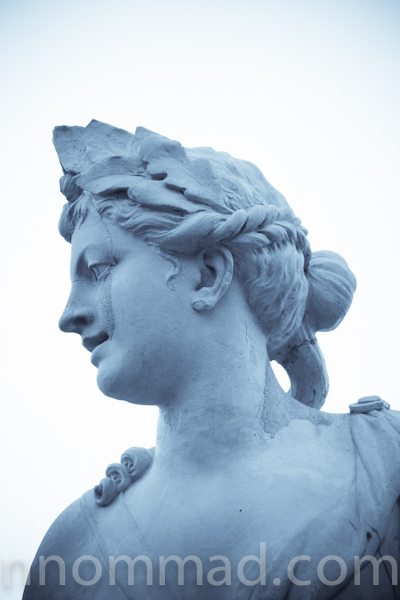
It’s said that a picture is worth a thousand words. Or that one picture can tell the entire story. What does the picture below say to you?

Asheville, NC

This picture of a statue was taken in Asheville, North Carolina. The defect below the eye makes it appear as if the woman is crying. The curled hair on her shoulder could look like the fingers of a lover’s caress.

Asheville, in western North Carolina, is perhaps best known for the Biltmore Estate, a privately-owned country estate of the Vanderbilt family. Beyond the estate lies a bohemian city with renowned restaurants, vibrant shops, a lively music scene, and a spirit that’s surprisingly different from one’s assumptions of a “mountain” town.